Palladius 2016: eleven varieties, no hurry
25 October 2026 · sommelier.vi.cat
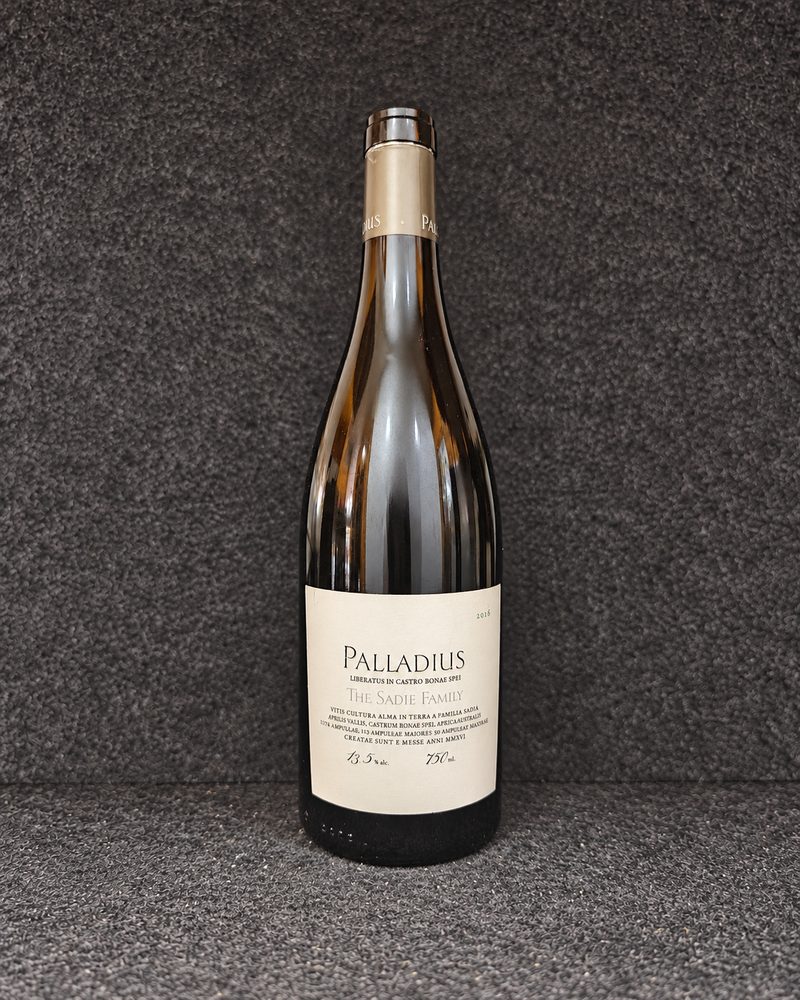
Some white wines arrive at the table and introduce themselves with a single aroma. Palladius 2016 would rather have a little more of your attention. In my glass there is wax, honey, saffron and ripe fruit, followed by a generous palate, silky texture and acidity that is still very much awake. Ten years after harvest, with no plans to retire.
The wine: Palladius 2016, The Sadie Family Wines. A white wine from Swartland, South Africa. The photographed bottle states 13.5% alcohol and 750 ml.
Swartland on the map
Swartland lies north of Cape Town, in South Africa’s Western Cape. Malmesbury is a useful reference point; Paardeberg, Riebeek Kasteel and Piketberg help locate the landscape discussed here.
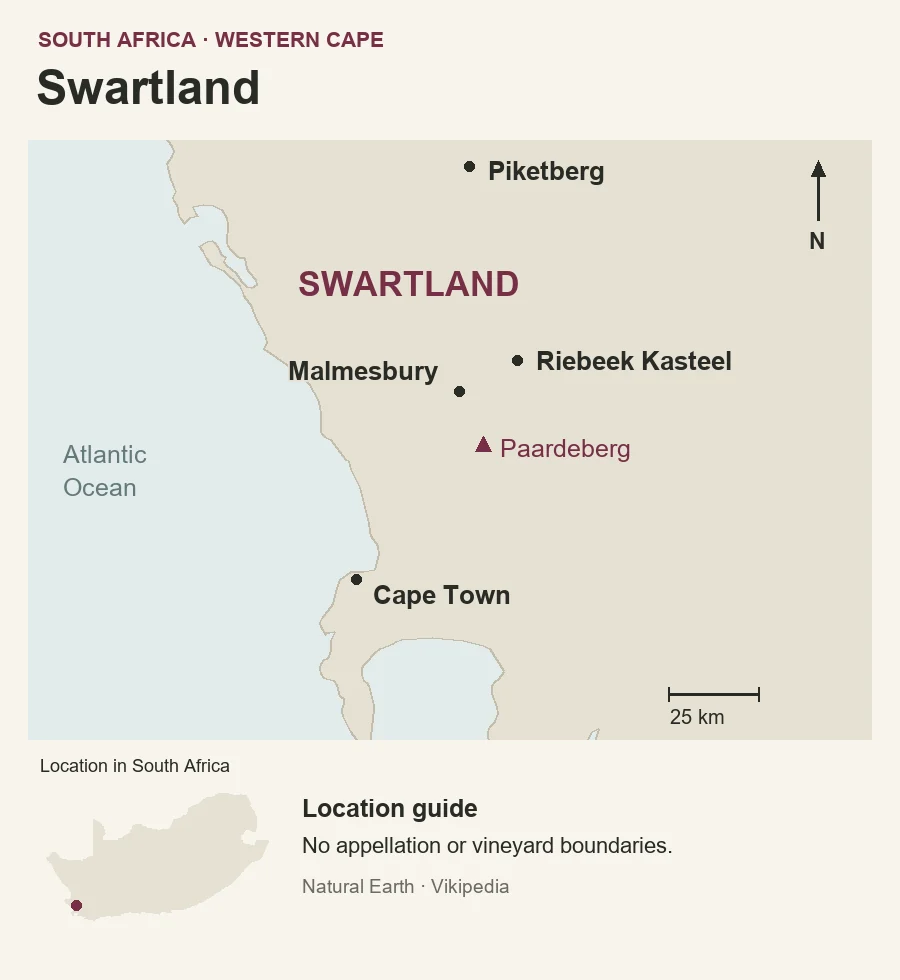
The markers show reference locations, not the vineyards behind this bottle. Map sources: Swartland Wine & Olive Route · Natural Earth.
Swartland: putting the glass on the map
We are in the Western Cape, north of Cape Town. Malmesbury is a useful point of reference in a landscape where vineyards share space with cereal fields and hills. Paardeberg, Riebeek and Piketberg help show that Swartland has different corners, rather than one postcard repeating itself all the way to the horizon. The regional wine route helps locate them.
When reading a wine from here, it helps to separate three questions: which region it comes from, which vineyards supplied the grapes and how it was made. They may sound like the same question, but they are not. A winery’s address gets you to the front door; it does not replace a map of its vineyards. We therefore introduce Palladius as a Swartland wine without automatically assigning all its fruit to a single Paardeberg hillside.
The interest lies in how a region can be expressed through a blend. A single-vineyard wine focuses on one place; a blend can seek a broader expression by bringing different components together. Neither wins on the strength of its format. In both cases, the result deserves to be tasted. Our Swartland guide provides an introduction to climate, vineyards and styles; the new article accompanying this card explores the decisions made in the cellar.
The winemaking, without the secret handshake
Eleven varieties and two years’ ageing: first clay and concrete, then large oak casks. This is documented in the 2018 release notes for Palladius 2016. The document’s date is not the vintage. Details from other harvests do not automatically apply to this bottle either.
My tasting of this bottle
What stays with me is the combination of wax, honey, saffron and ripe fruit, with a spicy background. On the palate, volume and silky texture meet vibrant acidity; the finish is very long, saline and mineral. These are my impressions of the bottle tasted in 2026, rather than a reproduction of the winery’s historical tasting note.
Honey describes an aromatic association, not an added spoonful. And “mineral” expresses a tasting impression: it cannot identify a rock or prove which vineyard supplied the wine. The pleasure is in enjoying that complexity without asking your palate for a geology certificate.
Sommelier’s note: my pairing suggestion is oven-roasted turbot with mushrooms. The fish’s texture could complement the wine’s volume, its acidity provide contrast, and the developed nuances find an affinity with the mushrooms. This is a pairing suggestion; the weight of the sauce and the final preparation matter too.
Vintage documentation: The Sadie Family, 2018 release, page 2. Geographical context: Swartland Wine and Olive Route, 1 July 2019. Label and tasting: material from sommelier.vi.cat. Sources checked on 21 October 2026.