
Château Musar 1998: maturity without pretending to be young
22 October 2026 · sommelier.vi.cat
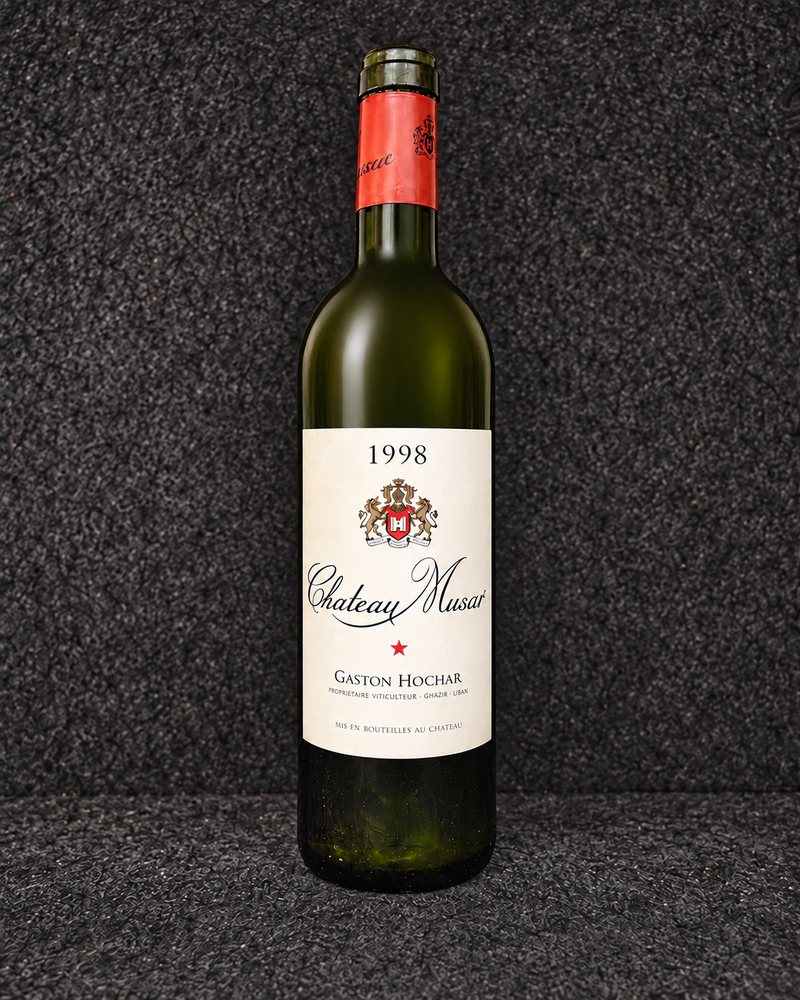
Does a wine from 1998 have to seem young for us to enjoy it? I won’t be asking this Musar for proof of age. What interests me is how it got here and what it has to say now.
Château Musar Red 1998. Bekaa Valley, Lebanon. Cabernet Sauvignon, Cinsault and Carignan. 13.5% alcohol. The vintage documentation highlights Cinsault’s prominence but gives no percentages for the blend.
What I find in my glass
I tasted it recently and found it at its peak of maturity. It has lost some of the freshness it had years ago, but it is still alive and has plenty to say. This bottle doesn’t need us to pass it off as young to make it interesting.
My impression is that, well stored, it could remain at this stage until around 2030. Beyond that, I would expect a more markedly aged character. That is my assessment of the bottle I tasted, not an expiry date or a promise for every remaining bottle: each will follow its own course.
The Bekaa: a little geography before a glass
We are inland in Lebanon, in an elevated valley between the Mount Lebanon and Anti-Lebanon ranges. Put aside the postcard image of vines beside a beach: there are mountains in the way. The Bekaa’s agricultural landscape combines vineyards with other crops, hot, dry summers, cooler nights and winters that can bring snow. Elevation helps explain why warmth and freshness can coexist here.
Musar locates its red-wine vineyards in the southern part of the valley. Its general documentation mentions Aana and Kefraya, with gravel over limestone. That describes the blend’s usual sourcing; it does not, on its own, identify the plots behind our 1998 bottle. Nor does it let us translate “limestone” into a particular aroma. Soil shapes a vine’s growing conditions; a glass is not a liquid geology sample.
There is another useful distinction: the winery is in Ghazir, near the coast, while the grapes come from the Bekaa. A winery’s address and its wine’s origin can be quite a winding drive apart. To understand the place, ask where the grapes grow, rather than stopping at the address on the label.
A vintage with an experiment
The story of 1998 includes 20,000 bottles filled a year earlier than the usual schedule. In Serge Hochar’s account, a later comparison did not persuade the winery to keep the change. Our regional article explores what happened and why the timing of ageing matters.
The historical note is not my current tasting
Musar described this wine in terms of delicate perfume, fresh red fruit, lively acidity and a spicy finish. That is the winery’s historical description, from another stage of its development; it is not a list of aromas I claim to have found today.
Sommelier’s note: if it is on your list, I would suggest it with herb-roasted lamb or a mushroom stew. I would avoid a very sweet or hot sauce that could overwhelm this mature bottle’s nuances. The recommendation depends on its condition when opened.
Documentation consulted on 21 October 2026: Musar’s official 1998 sheet and the winery’s 2019–2020 brochure. Personal tasting: sommelier.vi.cat.