
Rioja: one appellation, many conversations
18 October 2026 · Vikipedia
“I’ll have a Rioja.” It sounds specific until someone has to choose which one. Rather like requesting “Spanish music” and being surprised that it does not all sound like the same song.
If you arrived through Viña Tondonia Reserva 2008, we begin with Haro and a particular approach to ageing. But Rioja contains more villages, grapes and styles than that first bottle can hold.
Rioja on the map, not just the label
The appellation follows the upper Ebro valley across parts of La Rioja, the Basque Country and Navarra. Its three zones are Rioja Alta, Rioja Alavesa and Rioja Oriental. The wine region and the autonomous community of La Rioja are therefore not precisely the same thing.
The Ebro helps us navigate, but its valleys, terraces and surrounding mountains matter too. This is not a flat surface with an appellation placed on top. Changing elevation or aspect can change vineyard conditions without travelling very far.
Three zones to begin with, plenty of detail to explore
Atlantic influence is stronger towards the west, Mediterranean influence towards the east. That is a broad guide, not a climatic border drawn with a ruler. Elevation and terrain introduce differences within each zone.
Rioja Alta gives us our reference point of Haro. Rioja Alavesa takes us into the appellation’s Álava sector, while Rioja Oriental opens the journey eastward. Learning these names helps us ask better questions, rather than decide in advance how every wine should taste.
Soils are diverse too; there is no single “Rioja soil”. If every explanation ends with everything tasting mineral, it may be time to return from the map to the glass.
Tempranillo has company
Tempranillo is the dominant red grape, alongside Garnacha, Graciano, Mazuelo and other permitted varieties. Viura is prominent among the whites. White Rioja is a real thing, not a wine-list typo.
A blend may aim for a different result from a single-variety wine. Proportions, vineyards and winemaking matter. Knowing the grape provides a clue, but cannot predict every aroma or rank bottles from best to worst.
Origin and ageing answer different questions
Where the grapes grow is one question; how the wine is made and aged is another. “Reserva” is not a village, and “Rioja Alta” does not tell us how many years a wine spent in barrel. Obvious, until the conversation starts mixing them together.
It is worth asking about both. Wood and time belong to the story, but do not erase vintage or origin. Longer ageing does not automatically mean greater enjoyment for every person or every dish. A category cannot choose your dinner.
Haro and Tondonia: our first stop
López de Heredia locates Viña Tondonia in a bend of the Ebro near Haro. The name has a landscape behind it. The red Reserva 2008 technical sheet records six years in barrel and grapes from the producer’s own vineyards: concrete facts that help explain the bottle without making it a compulsory summary of all Rioja.
My notes of cherry, leather, tobacco, spice and lively acidity are in its profile. They describe that glass, not a checklist every Rioja must complete to pass.
For the next bottle we can change village, grape or winemaking approach and compare. No winner need be declared. Sometimes the best way to discover Rioja is to enjoy two quite different wines and realise that neither owes us an apology.
Sources and further reading
- DOCa Rioja · Geografía
- DOCa Rioja · Variedades
- López de Heredia · Viña Tondonia
- López de Heredia · Reserva 2008
Regional context expanded on 18 October 2026. General regional information does not replace the details of each wine and vintage.
Wine comes from somewhere
Wines from this region, glass by glass
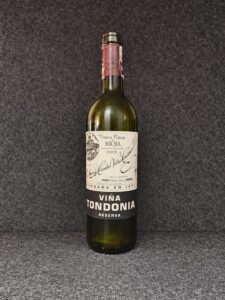
Viña Tondonia Reserva 2008
Six years in barrel, then bottle ageing. Cherry, leather, tobacco and spice: the winery thinks in decades; table four is watching the parking meter.