
Gelida and Can Martí: giving the bubbles a landscape
20 October 2026 · Vikipedia
At the table we ask for “something sparkling” as if that settles everything. It is a little like booking a restaurant on the condition that it has chairs. A start, certainly, but there is more to discover. Gran Torelló Grandes Añadas 2010 gives us a specific starting point: Can Martí in Gelida.
Four names, different jobs
Penedès provides the regional reference; Alt Penedès narrows it to the comarca, or county, and Gelida to the municipality. Can Martí identifies the estate. Reading these as different scales on a map helps us avoid treating an entire region as one uniform place. It does not mean memorising an atlas before taking a sip.
Corpinnat adds another layer: it is a European Union collective mark for Penedès sparkling wines, with commitments to organic grapes, hand harvesting and vinification on the property. It describes origin and working practices; it neither replaces the estate name nor decides what you should think of the wine.
Picture the landscape
Torelló describes Can Martí as a Mediterranean estate with vines and olive trees, its soils incorporating Garraf sediments and limestone accumulations. This describes the estate, not every corner of Penedès. It suggests a wider agricultural landscape beyond rows of bottles in a cellar.
That distinction matters. Knowing the soil gives us context, but does not let us point to a flavour and declare “there is the stone”. If tasting could be settled by consulting a geological map, we would save a great many glasses. We would also miss the enjoyable part.
The estate and the bottle tell different stories
The territory locates the wine. Vintage, winemaking and ageing develop the conversation. The Grandes Añadas 2010 entry explains poignettage and records my impression of the bottle separately from the producer’s description. Keeping those voices distinct lets us learn without promoting one person’s experience into a universal rule.
The Mediterranean does not make everywhere identical
Penedès spans coastal and inland settings, with differences in altitude and distance from the sea. DO Penedès documentation explains that range of microclimates. It provides regional context; citing it here does not turn a Corpinnat into a wine covered by that appellation. Geography and the designation on a bottle are different layers of the map.
Picture a hillside, its aspect and when it receives sunlight. Add elevation and the harvest year. “Mediterranean” remains a useful starting point, but no longer describes a single situation. We therefore do not assign Can Martí an exact altitude or another subzone’s climate without vineyard-specific evidence.
An estate is not one plant repeated
Knowing that the grapes come from Can Martí is valuable precision. Establishing the distribution of varieties between parcels, which were harvested first or the yield in 2010 would require further information. The estate can be the right scale for locating a wine without telling us every decision made that season.
Torelló does document the combination of macabeo, xarel·lo and parellada for Grandes Añadas 2010. These are not three ingredients that always divide the jobs identically. The outcome depends on the grapes reaching the cellar and how they are handled. A variety does not sign a contract to supply exactly one aroma.
From bunch to bubble
Grapes provide the starting point; the traditional method then creates effervescence through a second fermentation in bottle. Ageing on lees adds another stage. Knowing the estate does not replace understanding the winemaking, while discussing only months leaves out where everything began.
Our Gran Torelló 2010 entry separates that ageing from poignettage, riddling and disgorgement. You can also explore DO Cava’s four zones: the wines share a production method, but Cava and Corpinnat are not interchangeable names. The bubbles resemble each other more closely than their identity papers do.
A useful question for the next glass
Rather than asking only “is it good?”, try “where exactly does it come from, and how was it made?”. Dinner does not need to become a lecture. A clear explanation connecting the label to a place and a way of working is enough.
This is a first look at Gelida through one bottle. Other wines can reveal other sides of Penedès. We will build the map glass by glass; the geography exam remains optional.
Sources and review
- Torelló · ficha de la añada 2010
- Torelló · Can Martí
- Corpinnat
- sommelier.vi.cat · publicación original, 20/10/2026
Additional documentation
Expanded and reviewed on 20 October 2026.
Wine comes from somewhere
Wines from this region, glass by glass
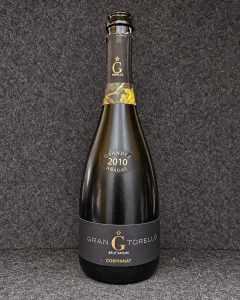
Gran Torelló Grandes Añadas 2010 · Ten years, still plenty going on
Freshness, fine bubbles and a savoury finish. A bottle from Can Martí that puts the work back into long ageing.