
The Bekaa and the three clocks of Musar 1998
22 October 2026 · sommelier.vi.cat
Someone puts a Lebanese red from 1998 in front of you. Before you taste it, your mind has already done some sorting: warm country, powerful wine, old bottle. Three mental labels, and we haven’t even smelled the glass. With Château Musar, it helps to ease off on the filing system.
To understand it, I suggest watching three clocks: the vineyard’s, which follows each growing season; the winery’s, which governs how and how long to age the wine; and each bottle’s, which keeps running long after release. The Bekaa supplies the landscape. Musar 1998 gives us a particular story with which to explore it.
First, cross the mountains
Travelling east from the Mediterranean, Lebanon’s geography runs from the coast to the Mount Lebanon range, the Bekaa Valley and the Anti-Lebanon mountains beside Syria. The Bekaa is therefore an elevated inland region. This geographical overview from Lebanon’s Ministry of Tourism helps correct the picture of Mediterranean vineyards planted beside the sea.
That matters because “Mediterranean country” cannot explain a vineyard’s conditions on its own. Distance from the sea, mountains, elevation and exposure change the picture. A name on a wine list can be very short; the place behind it deserves a few more words. Nor is this a garden devoted entirely to wine: the Bekaa is a farming region with many different crops.
Musar adds a small trap for the map reader. Its winery is in Ghazir, near the coast, while its red-wine vineyards are in the Bekaa, as its 2019–2020 brochure explains. Looking up the production facility’s address does not locate the grapes. It is a useful distinction here and in plenty of other wine regions.
Daytime heat, elevation and cooler nights
Hot, dry summers coexist with cooler nights and cold winters. There are vineyards around a thousand metres above sea level and others higher up. Elevation generally moderates temperature, but it is not one identical thermostat for the whole region: aspect and the conditions of each site also matter.
Another producer, Coteaux du Liban, offers a concrete example of that variety. It places its Zahleh vineyards at 1,300 metres and its Kefraya vineyards at 1,100. These are its sites, not Musar’s. They help explain why “Bekaa” cannot stand for a single elevation or growing situation.
For the drinker, the practical point is simple: let go of the equation “sunshine equals heavy wine”. Climate helps explain ripening, but picking dates, grape varieties and winemaking matter too. The final impression of freshness has to be assessed in the glass; it doesn’t arrive automatically with an altitude certificate.
Three grapes, without invented proportions
Musar 1998 combines Cabernet Sauvignon, Cinsault and Carignan. The vintage sheet describes a greater role for Cinsault but supplies no percentages. Dividing the bottle into equal thirds might make a wonderfully tidy infographic; it would also make up a fact.
Cinsault, also spelt Cinsaut, has a long history in Lebanese wine. Recognising the name Cabernet Sauvignon more readily is no reason to treat its partner as a minor guest. A blend is understood through its combined result, not as a popularity contest between grapes. Nor can we assign each aroma in a mature bottle to a particular variety without evidence to support it.
The first clock: a harvest that did not keep one time
The original 1998 documentation describes a cold, wet spring followed by months without rain. Picking began on 9 September; some grapes needed up to two more weeks. The winery itself did not identify a clear cause for that difference in ripeness.
That last detail is worth keeping. We can explain that vineyards do not always ripen together without inventing which slope, soil or decision caused this particular difference. Knowing a region does not mean we can reconstruct, from our table, what happened in every plot decades ago. Here we have an established fact —they waited— and a reason the source does not resolve.
The second clock: barrels are not the whole story
The same sheet records a year in French oak, blending in September 2000 and bottling in August 2001. These are separate stages: ageing the components, bringing them together and allowing the wine to continue developing in bottle. The 1998 on the label refers to the harvest, not the moment the cork went in.
This matters when we reduce the entire process to “how many months in barrel?” It can be a useful question, but it leaves out part of the timetable. Two wines with the same time in wood may have followed very different paths before and afterwards. One number cannot explain the whole ageing process.
Then comes the experiment. In Serge Hochar’s account published by Musar, 20,000 bottles were filled a year ahead of the normal schedule. After comparing the wines four years later, the winery returned to its previous timetable: the earlier bottling had a recognisable house character, yet seemed to be missing something.
The lesson is specific, not universal. The trial does not prove that every wine improves if you wait another year, or that tradition should never change. It shows a winery testing a modification and asking whether it preserved the result it wanted. It also leaves one question open: the available documentation does not tell us which bottling the bottle I tasted belonged to.
The third clock: your bottle has its own life
Once bottled, wine keeps changing. In a red, aromas, colour and the feel of tannins —that drying sensation on gums and in the mouth— can evolve. Change, however, does not mean endless improvement. WSET’s explanation of wine ageing, published on 21 March 2023, helps separate those two ideas.
Storage matters as well. Identical labels and vintages do not guarantee identical storage histories. An old tasting note is useful for understanding how the wine was described then, but it cannot replace tasting the bottle in front of us. That is also why saying “it will last until this year” calls for rather more caution than enthusiasm.
In my recent tasting, this Musar was at its peak of maturity: less fresh than years ago, but alive. My approximate horizon of 2030 depends on good storage and the behaviour of each bottle. The wine card sets out that assessment and my suggestions for the table. The landscape and our three clocks help us arrive at the glass better informed; the wine, quite properly, will have the final word.
Public sources are linked in the relevant sections; consultation and editorial review: 21 October 2026. Information from other wineries illustrates regional diversity and is not attributed to the vineyard plots behind Musar 1998.
Wine comes from somewhere
Wines from this region, glass by glass
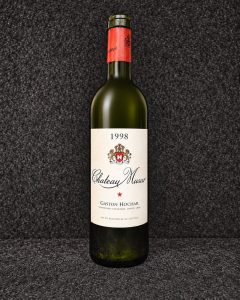
Château Musar 1998: maturity without pretending to be young
My tasting of a mature Musar, its Bekaa origins and a vintage that put the winery’s timetable to the test.