
Casa Castillo · Las Gravas 2021
20 October 2026 · Vikipedia
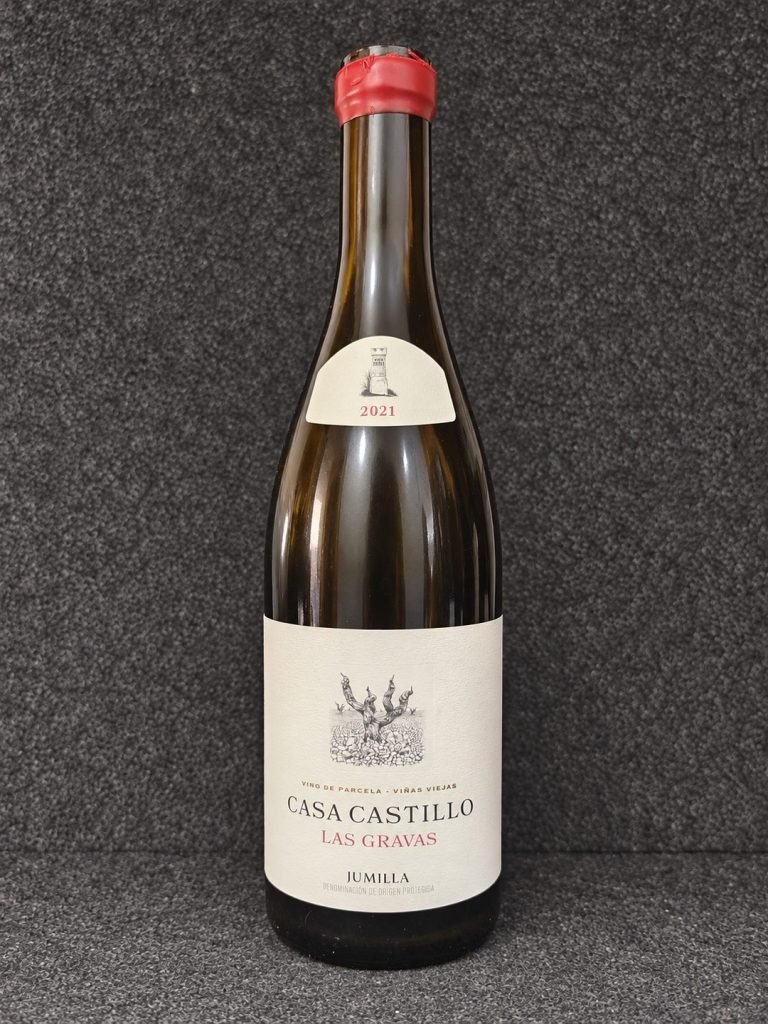
Some wines make you reach for a map. This one also encourages a look at the ground. There is no need to bring a rock to dinner: the bottle provides quite enough luggage.
Casa Castillo · Las Gravas · 2021 · Jumilla PDO · Monastrell and Garnacha.
My tasting note
In my post of 17 October 2026, I described a floral and mineral profile, balance and a delicate Mediterranean expression. That is my impression of this bottle, not an aroma checklist you need to pass before enjoying it.
A more useful address than “Murcia”
Jumilla lies in south-eastern Spain. The appellation spans Murcia and Albacete: the city’s name does not tell the entire regional story. This dry inland landscape, with marked seasonal contrasts, is a reason to ask about the site before assigning one style to every bottle.
Casa Castillo describes its estate on the northern slopes of the Sierra de El Molar, with vines, almond trees and olives. This is vineyard information, not an assumption based on the winery’s postal address. Las Gravas brings us closer still: the importer identifies a particularly stony vineyard bearing that name.
The landscape cannot taste for us
Dry farming means relying on rainfall; bush-vine training describes a vine without a trellised wall of foliage. These details help us imagine the work in the vineyard. Neither guarantees quality or explains every sensation in the glass on its own.
“Mineral” is part of my tasting vocabulary here. It does not establish that a flavour came directly from the stones. Understanding the wine means connecting personal observation with producer information while keeping the two distinct.
The vintage has its own small print
Importer Liberty Wines’ 2021 technical sheet resolves details we previously left open: 92% monastrell and 8% garnacha, with 20 months in wooden vessels of 5,000 and 500 litres. These are vintage-specific details, not a recipe for every bottle called Las Gravas. A technical sheet puts the facts in order; it does not get to taste on our behalf.
What those details add
We can separate three questions: where the grapes grew, which varieties were used, and what happened in the cellar. “Jumilla”, “monastrell” and “20 months” answer different questions. None alone promises powerful flavour, prominent oak or a particular aroma.
Vessel size also takes us beyond a one-word explanation: wood does not always mean the same barrel. Even knowing the capacity does not let us calculate vanilla intensity or assign every sensation to a cellar operation. My tasting note describes delicacy and balance; the technical information enriches that conversation without overruling what someone else may perceive.
To understand how a warm region can offer different expressions, continue into Jumilla and the slopes of El Molar. There is more to monastrell here than a name to negotiate when opening the wine list.
Sources and review
- Casa Castillo: finca y cultivo
- European Cellars: Las Gravas (descripción general, no ficha exclusiva de 2021)
- Consejo Regulador: territorio
- Consejo Regulador: viñedo
Additional documentation
Expanded and reviewed on 20 October 2026.