
A still white from Jerez: beyond the familiar image
18 October 2026 · Vikipedia
Say “Jerez” and one person thinks of fino, another of sweet wine, and someone else of a glass left far too long on the sideboard. Before debating, it helps to check that we mean the same thing.
If you arrived through El Muelle de Olaso, your entrance is a Palomino white. From there we can look at the landscape and understand why one area supports such different conversations.
Between the inland vineyards and the Atlantic
We are in Cádiz, southwestern Andalusia. Jerez de la Frontera, Sanlúcar de Barrameda and El Puerto de Santa María are historic reference points, not a complete list of every municipality in the wider wine region.
Picture open, rolling hills, vineyards and pale earth. Summers are hot and dry, but Atlantic influence matters too. The poniente wind is cool and moist; the levante is warm and dry. Distance from the coast introduces differences between vineyards. “It is hot” is true, but leaves half the explanation unfinished.
Albariza and pagos, without a geology exam
Albariza is limestone-rich soil that can retain moisture for the dry months. Clay-rich barros and sandy arenas also occur. Pagos are traditional vineyard areas with local soil and climate characteristics: names such as Macharnudo, Carrascal and Balbaína help us zoom in.
You need not memorise them to enjoy a bottle. It helps to know that asking about the pago can tell us more than simply saying “Cádiz”. Pale earth does not mean the wine must taste of chalk either. Geology is interesting enough without eating it.
The grape matters; what happens next matters too
Palomino is central to the area’s wine history. But identifying the grape cannot predict the whole result: winemaking and ageing can take it in different directions.
Biological ageing involves flor, a layer of yeasts on the wine’s surface. Oxidative ageing develops wine without that protection and in contact with oxygen. These are different processes, not categories of “natural” and “spoiled” wine. Controlled exposure to oxygen is not the same as forgetting an open bottle in the kitchen.
This vocabulary helps explain the region’s sherry styles, but should not automatically be applied to every white made near Jerez. Sharing a place does not require sharing a recipe.
El Muelle de Olaso: entering through a vino de pasto
Luis Pérez presents El Muelle de Olaso as an introduction to the region through vinos de pasto. It is Palomino Fino, and the winery describes albariza de barajuelas soils. Our profile retains the original post’s reference to Vino de la Tierra de Cádiz: being near Jerez does not entitle us to change the designation.
The bottle discussed is from 2023. The vintage helps locate it without automatically applying every detail of a general technical description. My impressions of white fruit, freshness and a saline finish remain a tasting note, not a chemical analysis of the Atlantic.
The water reserve is underfoot
Albariza’s porous structure helps retain rainwater; a crust can form on the dry surface, limiting losses. That explains how the soil functions, rather than guaranteeing immunity from drought. The vineyard still experiences a particular season, with its rainfall and hot periods.
When a pago is named, ask what is known about that place and the vineyards supplying the grapes. A documented name adds precision. It cannot be deduced from a winery address or a nautical word on a label: a wine may honour a dock without its roots having grown through the jetty.
Flor works; the solera organises
Flor is a community of living yeasts that changes the wine during biological ageing; it does more than act as a lid. A solera, by contrast, is a system for ageing and blending wines at different stages. The biological agent and the cellar’s organisation are different concepts.
Wine is partially withdrawn from the oldest scale and replenished from the next, continuing through progressively younger scales. The entire system is not emptied each time. That helps explain why a historic date associated with a solera is not the single vintage of everything in your glass.
An imaginary example helps: withdrawing a portion and replacing it keeps a collection evolving. This differs from leaving one bottle closed since the year in its name. A history can be long without every millilitre being as old as the building.
Back to our white wine
Our starting point is El Muelle de Olaso 2023. Its vintage places it in a particular season, while production information explains its journey through the cellar. We do not automatically assign flor or solera ageing because it comes from this area. Territory, grape, harvest and production remain separate questions.
That is the pleasure of approaching Jerez through several doors: a conversation can move from vineyard to cask to a still white, while checking which wine we mean. There is enough diversity to enjoy without putting every bottle in the same uniform.
A practical way to keep exploring
For the next bottle, ask where the grapes grew, which style it is and how it was aged. Those answers give the map some depth. Then we can discuss aromas, food and preferences without demanding a postgraduate qualification before the first sip.
El Muelle is our first doorway; future bottles will open others. This region offers considerably more than the memory of that neglected glass on the sideboard.
Sources and further reading
Additional documentation
Expanded and reviewed on 20 October 2026.
Wine comes from somewhere
Wines from this region, glass by glass
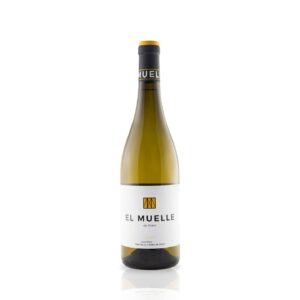
El Muelle de Olaso · 2023
White fruit, freshness and a saline finish. Whether the bill leaves a salty taste depends on who picked the bottles.