
Pomerol: a patchwork of soils, not a single recipe
23 November 2026 · sommelier.vi.cat
When Pomerol appears on a wine list, it is tempting to think the name explains everything. A glass of Clos René 2015 invites the opposite approach: open a map and ask what lies behind it. One soil? A grape that does all the work? The same recipe on every estate? Wine usually becomes more interesting when we stop expecting such convenient answers.
A small place, different scales
Start with Libourne, in Bordeaux’s Right Bank wine landscape. The original Pomerol page of the World Atlas of Wine consulted for this article describes gently undulating ground and neighbouring properties. You do not need a mountain to find meaningful differences between vineyards: the changes beneath an apparently unassuming landscape matter too.
On a map we can recognise roads, settlements and relative positions. That helps us find our way; it does not yet tell us which plot supplied a bottle. This is a useful distinction when exploring a region virtually: a winery pin marks an address, not the boundaries of all its vineyards or the certified origin of every grape.
Clay does not fill the whole map
The CIVB describes clayey and sandy gravel, varying between plots, and iron oxides in the subsoil, locally called crasse de fer. This is a regional portrait, not a soil analysis of Clos René.
The practical lesson is to avoid a chain of shortcuts: Pomerol, therefore clay, therefore an inevitable flavour. Change the scale of the story and you change what can be claimed. Describing an estate needs its own documentation; comparing two plots needs information about both. A famous neighbour is not a geological certificate, however impressive the name sounds over dinner.
Soil works through the vine
Van Leeuwen, Roby and de Rességuier’s 2018 review explains soil effects through temperature, water and nutrition. It does not identify a universal mineral composition that guarantees quality.
That approach changes the questions. Instead of memorising a list of stones, it is more useful to ask how the vine lives there. Naming a material starts an explanation; it does not finish it. And a tasting description —floral, spicy, mineral— is not a chemical analysis of the ground. It records a perception, which deserves its own place in the story.
In a technical summary published in 2020, the same researchers distinguish moderate water deficit from severe stress. Less water does not automatically mean better wine.
Keep that distinction in mind when reading about a vintage. Rain is not good or bad by definition: it needs a place in the calendar and an understanding of the vine’s condition at that point. Reducing a harvest to “it was hot” removes the sequence that helps explain it. Nor does a grower’s work disappear just because the ground has a prestigious name.
Three grapes, without inventing a recipe
Merlot, Cabernet franc and Malbec/Cot are associated with Clos René in commercial documentation for 2015. We do not have a primary technical sheet for that harvest confirming their proportions. They are presented here as grape context, without turning planting figures from another date into this bottle’s blend. The following profiles are general and do not replace an official vintage note.
Merlot
Plantgrape describes its potential for wines with body, colour and relatively supple tannins. Supple does not mean without structure. It is a useful way into the language used at the table, not a guarantee that every Merlot will have the same texture.
When someone asks for a “smooth red”, it helps to clarify what they want to avoid: roughness, high alcohol, too much oak or pronounced acidity. These are different questions. A grape name starts a conversation, but it cannot settle it without considering the particular wine.
Cabernet franc
Plantgrape notes its potential for aromatic wines. Sharing the first word of its name with Cabernet Sauvignon is no reason to confuse the two. Identifying a grape in a blend does not allow us to assign each perceived aroma to it with certainty.
That includes the floral notes in my Clos René: describing them is legitimate; identifying the grape responsible would require evidence a glass alone cannot provide. We taste a blend as a whole, not as three boxes that must all be filled in.
Malbec / Cot
Plantgrape lists the variety as Cot. Recognising the synonym helps us read French sources without counting two grapes where there is one. Its appearance in information about a wine does not authorise an invented percentage or the automatic transfer of another region’s style.
Putting 2015 in its place
Geny and Dubourdieu’s report on 2015 offers favourable regional context and explains the importance of the weather sequence. It does not assess this bottle opened in 2026. A good regional vintage and a bottle’s present condition are connected but different questions.
In my Clos René tasting I find ripe fruit, flowers, cedar, tobacco, leather, coffee and spices, with polished tannins. That experience belongs to sommelier.vi.cat and is developed in the linked wine profile. We do not present it as a statement by the producer or as the proven effect of a particular clay.
Back at the wine list, Pomerol can now be more than an imposing name: a place that invites attention to scale, vine, vintage and, finally, bottle. The map brings us closer; the glass still has the final say about what we are drinking.
Sources: World Atlas of Wine, original FRANCIA.pdf, page 100 checked in the private library; edition not verified from the imprint. CIVB Pomerol page, no visible editorial date; van Leeuwen and colleagues, OENO One, 30 June 2018, and IVES Technical Reviews, 28 October 2020; Geny and Dubourdieu, 2015 harvest report; linked Plantgrape profiles. Consulted 19 November 2026. Private library material is neither reproduced nor publicly linked.
Explore Pomerol
Regional map · Explore the landscape in Google Earth
An overview of the area, not a boundary map of Clos René vineyards or proof of the origin of its 2015 grapes. In Google Earth you can zoom in and tilt the view.
Read the Clos René 2015 wine profile and tasting note.
Wine comes from somewhere
Wines from this region, glass by glass
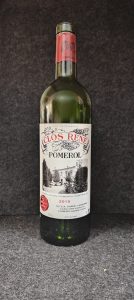
Clos René 2015: Pomerol with time to talk
My 2026 tasting of Clos René 2015: ripe fruit, flowers, coffee and spice, with polished tannins and Pomerol context.