
Subirats: reading Cava through landscape and time
8 November 2026 · sommelier.vi.cat
A map can locate a winery. On its own, it cannot explain what has happened inside a bottle. Approaching Cava through Subirats calls for two perspectives: place and time. One provides orientation; the other helps explain decisions that a vineyard photograph cannot show.
A municipality within Penedès
The municipality describes Subirats as a wine-producing area between Sant Sadurní d’Anoia and Vilafranca del Penedès. Its settlements include Ordal, Lavern, Sant Pau d’Ordal and Els Casots. This is a municipality containing several places, not a single estate.
The distinction matters when reading a wine profile. A producer’s address does not necessarily identify every vineyard supplying its grapes. A contextual map should indicate the known area and reserve vineyard markers for documented origins. A marker can be very precise while answering the wrong question.
Geography and designation
Penedès provides the geographical setting here. D.O. Cava identifies the sparkling wine’s designation. The two should not be exchanged when classifying a bottle, nor should a subzone be inferred solely from a company address. The territorial index can organise the material under Spain and Cava, retaining Subirats as context.
What happens during ageing
The Cava specification consulted explains the second fermentation in bottle and subsequent ageing in contact with lees, the yeast sediment. Autolysis is the breakdown of yeast cells by their own enzymes and contributes to aromatic development. This explains a process; it is not a mandatory checklist of flavours for every glass.
The specification linked by the Regulatory Council, consulted on 8 November 2026, sets a minimum of thirty months between tirage and disgorgement for Gran Reserva. That regulatory reference does not establish how long an individual bottle actually spent on its lees. Its production records are needed; the harvest year alone cannot complete the calculation.
Two different dates
The vintage identifies the harvest. Disgorgement is the removal of sediment from the second fermentation. Knowing both helps frame better questions about a Cava’s journey, but storage still matters. An older bottle does not automatically promise a better experience.
As a reading exercise, compare two technical sheets from one producer and separate general information from details that change with the vintage. The aim is not to add months as if they were points. It is to understand the intended style and establish that the information belongs to the bottle in front of us.
Cardús as a starting point
Cardús makes that caution practical: an official 2018 reference appears in the 2023 Premis Vinari results, while the winery sheet located covers 2019. These are different documents about different vintages. Neither allows missing details in the other to be filled by intuition.
The wine profile includes the personal tasting by sommelier.vi.cat. This article provides context without replacing it with a generic description of long ageing. As a pairing suggestion, baked fish offers a starting point; the weight of the dish and the actual profile of the Cava should guide the final choice.
Reading the area on a map
Start with a broad view of Penedès, then move closer to Subirats and Can Batista. The municipal listing places Bertha’s premises there. Looking at open land, slopes and settlements helps frame questions about the landscape; it neither defines vineyard boundaries nor establishes which plot supplied a particular harvest.
The wine atlas’s chapter on Catalonia provides historical context for the relationship between Penedès and Cava. It helps explain the regional importance of sparkling production. It does not provide a profile of Cardús 2018, and its historical figures are not presented here as current statistics.
From landscape to glass, without shortcuts
The map and the tasting complement each other, but neither can answer every question. A brioche aroma cannot date disgorgement; lively acidity does not prove a particular growing altitude. Aromas are good conversation starters, not certificates.
The Cardús 2018 bottle tasted by sommelier.vi.cat showed ripe fruit, creamy texture and well-integrated acidity. The wine profile develops that experience. Production context helps interpret it, but does not turn a personal impression into a laboratory measurement. With a moderately intense dish, it is worth observing whether the wine retains its freshness and whether the food leaves room for its dry finish.
Sources and further reading
Subirats · Bertha / Subirats · D.O. Cava · Premis Vinari 2023 · Cardús 2019
Accessed: 8 November 2026. Library: wine atlas, Catalonia chapter, p. 194; historical context, edition not identified.
Subirats on the map
Contextual view of Subirats and Penedès; it does not define the vineyards supplying Cardús 2018.
Wine comes from somewhere
Wines from this region, glass by glass
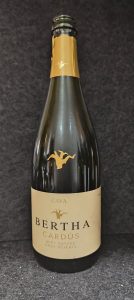
Bertha Cardús 2018: the time behind the bubbles
Ripe fruit, delicate bubbles and a creamy texture: a personal tasting of Bertha Cardús 2018, with Subirats as its geographical context.