
Reserva and Gran Reserva: what Rioja’s label tells you, and what it does not
5 November 2026 · sommelier.vi.cat
Myths and curiosities · Designation of origin · sommelier.vi.cat
The label says Gran Reserva and seems to have made the decision for us. More years, a higher category, better wine: it is a convenient calculation, but it combines different questions. In Rioja, ageing terms communicate specific production and maturation requirements. They are neither tasting scores nor guarantees that we will prefer one bottle to another.
First, understand what the label tells you
The Rioja product specification, amendment AM13, sets the minimum periods. Red Reserva requires at least thirty-six months of total ageing, including specific minimums of twelve months in oak and six in bottle. Red Gran Reserva requires sixty months in total, with at least twenty-four in oak and twenty-four in bottle. The component minimums sit within the total; they are not added on top.
For whites and rosés, Reserva requires twenty-four months in total and Gran Reserva forty-eight; both require at least six months in oak. Rules remembered from reds should therefore not be automatically applied to whites. These figures concern Rioja and the stated still-wine categories; they do not summarise every appellation or sparkling wine.
What the number does not tell you
The table answers a question about minimum requirements. By itself, it does not tell us which vintage we will prefer, how a bottle was stored after release, or whether we want a style led by fruit or maturity. Converting months into points would add an answer that the document does not provide.
That does not make the terms mere decoration. They belong to a certification system with conditions extending beyond a word on a label. Our suggestion is to respect what they certify without asking them to decide personal preference. A regulation can organise a category; dinner still requires a choice.
Generic does not mean unaged
The Regulatory Council’s explanation of classification makes clear that the generic category can include wines that have undergone ageing without falling within the other terms. The absence of Crianza, Reserva or Gran Reserva therefore does not automatically establish that a wine has never spent time in wood.
The familiar shortcut is to imagine a single ladder. A more useful approach is to read the producer’s information: how long, in which vessels, and with what stated intention? If a detail is unavailable, asking is preferable to completing the story by intuition.
Vintage and style still have a place
When comparing two wines, we suggest starting with what you want to find and the documented information for each. There is no obligation to choose the term with the longest minimum ageing. A different desired style, intensity or relationship with food may lead to a different choice without making it less considered.
In Territory, you can look for Rioja and explore the related wines and articles. Geographical context helps frame questions; it does not turn an ageing category into a precise location. Origin and maturation are two ways of describing wine that are best read together.
Sommelier note. Explain what the term certifies before describing the bottle’s style. As a suggestion, a mature red may accompany a moderately intense stew, but the dish, structure and actual condition of the wine matter more than the word Reserva.
Sources and scope. Rioja specification AM13, amendment dated 30 October 2025, ageing sections; Regulatory Council classification, consulted on 5 November 2026. The original Tempranillo chapter in the private library was also checked as conceptual guidance, not as a replacement for current rules. Preferences and service examples are editorial suggestions.
Wine comes from somewhere
Wines from this region, glass by glass
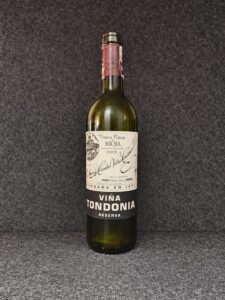
Viña Tondonia Reserva 2008
Six years in barrel, then bottle ageing. Cherry, leather, tobacco and spice: the winery thinks in decades; table four is watching the parking meter.